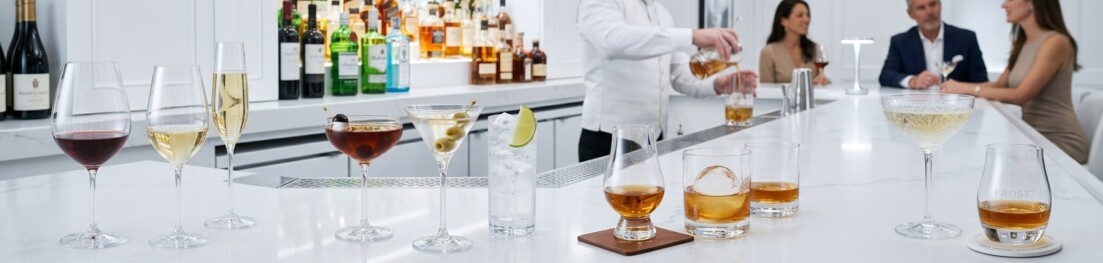
Why Your Glass Matters as Much as Your Drink: The Forgotten Art of Proper Glassware
Have you ever ordered a top-shelf bourbon or a carefully crafted cocktail, only to have it served in a thick, heavy-bottomed, utility-grade tumbler that feels like it belongs in a diner?
It’s one of the most underrated tragedies in modern nightlife.
We live in a golden age of craft spirits, artisanal bitters, and small-batch wineries. Bartenders spend years perfecting balance, temperature, and dilution. Yet, all too often, that dedication hits a wall the second the liquid enters the vessel.
The glass you drink from isn't just a container—it is a delivery system for aroma, temperature, and tactile sensation. Changing the glass fundamentally changes the drink.
The Science Behind the Shape: Why Vessel Geometry Alters Taste
To understand why glassware matters, you have to look at how human sensory perception works. Flavor is roughly 80% aroma. When you take a sip, your olfactory receptors do the heavy lifting long before your tongue registers sweetness, acidity, or bitterness.
Here is how glassware design actively reshapes your drinking experience:
1. Aroma Concentration & Headspace
The bowl of a glass acts as a collection chamber for volatile aromatic compounds.
- A wide bowl allows liquid to oxygenate and release complex aromas.
- A tapered or narrow rim traps those aromas and funnels them directly toward your nose as you tilt the glass.
If a glass is too wide at the top (like a flat, old-fashioned shallow saucer), delicate aromas dissipate into the air before you can smell them. If it’s too narrow or filled to the brim, the harsh ethanol vapor overwhelms your senses.
2. Rim Thickness and Flow Dynamics
The thickness and roll of a glass rim dictate where liquid lands on your palate. A thin, laser-cut rim allows the drink to glide smoothly onto the center of the tongue, creating a velvety, seamless mouthfeel. A thick, rolled lip causes the liquid to splash clumsily, emphasizing sharp alcohol bite over subtle flavor nuances.
3. Temperature Regulation
Heat is the enemy of balance. Stems on wine and cocktail glasses aren't just for aesthetics—they keep your 98.6°F hands from warming chilled liquids like Champagne, Martinis, or Manhattan variations.
Breakdown: Matching the Glass to the Pour
- Bourbon & Neat Spirits (The Glencairn or Tulip Glass)
Why it matters: The wide base allows effortless swirling to release aromatic compounds, while the pinched neck concentrates delicate oak, vanilla, and caramel notes—all while giving harsh ethanol fumes a path to escape. - Complex Red Wines (Large Bordeaux or Burgundy Bowl)
Why it matters: Maximizes surface area for essential aeration. This breathing process softens aggressive tannins and liberates intricate fruit, botanical, and earthy aromas. - Aromatic Cocktails (Nick & Nora or Coupe Glass)
Why it matters: The stem keeps chilled Martinis or Manhattans from warming in your hand. Meanwhile, the rounded bowl channels subtle botanicals and expressed citrus oils directly to your olfactory senses with every sip. - Effervescent Cocktails (Tall Collins or Highball Glass)
Why it matters: The narrow, upright silhouette minimizes surface area exposure, retaining carbonation and keeping bubbles lively and crisp throughout the entire drink.
Why Most Bars Fall Short
If glassware is so essential, why do so many establishments get it wrong?
In short: operational convenience.
Most commercial bars prioritize durability over presentation. High-volume venues rely on thick, tempered glass that can survive commercial dishwashers and accidental drops on quartz countertops. While this saves money on breakage, it sacrifices the drinker's experience. Drinking a $20 single-malt whiskey out of a thick, heavy-rimmed water glass strips away the nuance you paid for.
Finding a venue that treats glassware with the same reverence as the ingredients inside it is rare.
A Refreshing Exception: Getting It Right in Doylestown
Every once in a while, you stumble upon a spot that understands the complete sensory picture.
If you ever find yourself wandering around downtown Doylestown, drop into Frost Doylestown on State Street. It’s a chic, lounge-style setting, but what immediately grabs your attention is their quiet obsession with details—especially their glassware.
Rather than stocking standard, indestructible barware, they match each cocktail and spirit with delicate, beautifully balanced crystal and specialty glasses. Holding a sleek Nick & Nora or sipping a curated pour from a perfectly weighted glass at Frost instantly highlights what high-end drinking culture should feel like. It elevates a simple evening drink into a memorable tactile experience.
Reservations and More
Book Your TableThe Takeaway: Elevate Your Pour
Whether you are building your home bar cart or choosing where to spend your evening out, pay attention to the glass.
Great spirits and cocktails deserve a vessel designed to bring out their best. The next time you order your favorite pour, take a moment to look at the rim, feel the weight, and smell the headspace. You’ll realize that the glass isn't just holding your drink—it's completing it.
Frequently Asked Questions on Glassware
Why does a Glencairn glass work better for bourbon than a standard tumbler?
A Glencairn glass features a wide bowl and a tapered neck. The wide base lets you swirl the spirit to release aromatics, while the narrowed top concentrates vanilla, oak, and caramel notes toward your nose while allowing heavy alcohol vapors to dissipate safely.
Does rim thickness really change how a drink tastes?
Yes. A thin, laser-cut rim lets liquid flow smoothly across your tongue, directing it to specific taste zones seamlessly. A thick, rolled rim causes the liquid to splash into your mouth, often overemphasizing harsh acidity or alcohol burn.
Why are Martinis and Manhattan cocktails served in stemmed glasses?
Stemmed glassware keeps your body heat away from chilled liquid. Drinks served "up" (without ice) rely on stemware like Coupes or Nick & Nora glasses to maintain proper serving temperature and prevent quick warming while holding the glass.
Can I use one universal glass for all red and white wines?
While specialized glasses enhance specific varietals, a medium-sized, tulip-shaped wine glass works as a great universal option. It provides enough surface area for red wine aeration while keeping white wines chilled and aromatic.