The Verdict: Why Not All Restaurant Reviews Are Created Equal
In the digital age, a restaurant’s reputation is often decided before a guest even steps through the front door. We’ve all done it—scrolled through a feed of stars and comments while deciding where to spend our Saturday night. However, for those looking for the most accurate reflection of a dining experience, it is essential to look at where those reviews are coming from.
While Google Reviews and OpenTable are the two heavy hitters in the industry, they operate on completely different playing fields. Here is how to weigh them and why one carries significantly more "stake" than the other.
Google Reviews: The Wide-Net Approach
Google is the undisputed king of visibility. Because it is integrated directly into Search and Maps, it attracts the highest volume of feedback.
The Pros: You get a massive sample size and a quick look at the overall vibe, photos of the food, and general accessibility.
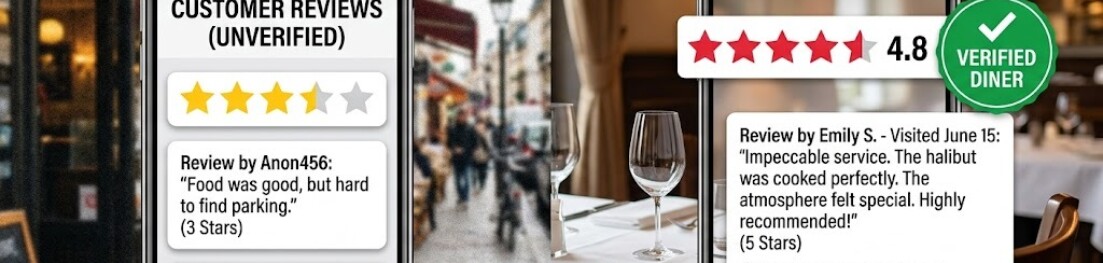
The Flaw: There is zero validation. Theoretically, someone could leave a one-star review because they couldn't find parking nearby, or a five-star review because they like the owner’s shoes—all without ever tasting a single dish. This lack of a "gatekeeper" makes Google susceptible to "review bombing" or spam.
OpenTable: The Gold Standard of Authenticity
If you want a review you can actually trust, look toward OpenTable. The platform uses a "Verified Diner" system that creates a closed loop of accountability.
Why OpenTable Reviews Carry More Weight:
- Mandatory Reservations: A user cannot simply stumble onto a page and leave a comment. They must have a confirmed reservation on file.
- Attendance Verification: The restaurant must manually "check-in" the guest or acknowledge the reservation was honored. If you are a "no-show," the ability to leave a review is never unlocked.
- Specific Feedback: Because the system knows exactly when you dined, the feedback is often more detailed regarding the service and atmosphere of that specific night.
The Takeaway: When you read an OpenTable review, you aren't just reading an opinion; you are reading a post-meal report from someone who was physically sitting at a table, interacting with the staff, and eating the food.
Which Should You Trust?
Think of it this way: Google is for the "Big Picture," but OpenTable is for the "Truth." If a restaurant has a 4.2 on Google but a 4.8 on OpenTable, the OpenTable score is likely the more accurate representation of the actual culinary experience. It filters out the noise of people who never walked through the door and focuses solely on the guests who did.
Next time you’re planning a date night or a celebratory dinner, don’t just look at the number of stars—look for the "Verified Diner" badge. It’s the difference between an unverified rumor and a firsthand account.